Menu
Menu



BROADCAST FILM AND VIDEO DIRECTORY
Broadcast News

22/06/2026
TREE Digital Studio Bolsters Colour Workflow With Baselight M
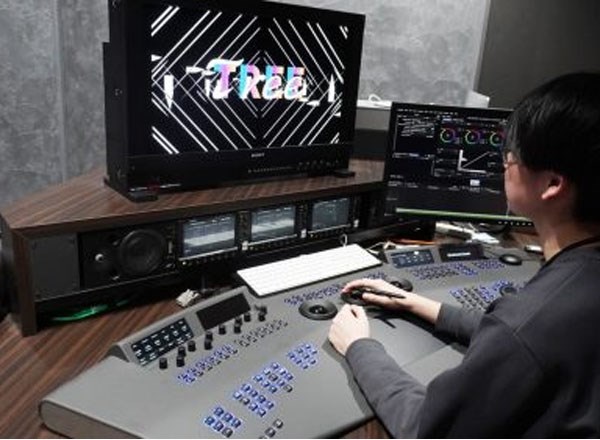
TREE Digital Studio has deepened its colour capabilities with the adoption of FilmLight’s Baselight M on macOS and the launch of a new screen grading room, further cementing its position as a top-tier post-production hub in Japan. The move builds on years of international collaboration and suite expansion, and targets both creative gains and greater workflow efficiency.
In a conversation with FilmLight, senior colourist Yusuke Adachi and assistant colourist Katsuhiro Naganuma outlined the studio’s philosophy, evolving pipelines and the Baselight tools shaping their day-to-day grading.
Yusuke Adachi (Senior Colourist): TREE Digital Studio has evolved over the past decade into one of Japan’s leading creative hub, combining global expertise with advanced local facilities. Originally established through international partnerships with Company 3 and later MPC, the studio has continuously expanded its grading suites and workflows to support increasingly sophisticated productions.
Within our post-production division, Digital Garden, the colour department handles grading, finishing, and workflow development across a wide range of productions – from nationwide TV commercials to internationally recognised films.
In 2026, the introduction of Baselight and our dedicated Screen Grading Room (SCR-331) further strengthened our ability to deliver premium cinematic experiences with the highest creative and technical standards. Today, clients rely on TREE Digital Studio not only for its advanced technology, but also for the creativity, precision, and reliability of its team.
Reflecting on their routes into the craft, the colourists described how hands-on experience and international exposure inform their approach to light and colour.
Yusuke Adachi: I originally studied cinematography at the College of Art, Nihon University, where I focused on camera and lighting with the goal of becoming a director of photography. I also gained on-set experience as an assistant.
During a colour grading course, however, I discovered a strong interest in working with light and colour, which led me to pursue a career as a colourist. After graduating, I joined TREE Digital Studio as an assistant, where our collaborations with Company 3 and MPC/The Mill provided valuable technical training from experienced colourists, particularly in interpreting light and controlling colour.
My background in cinematography, combined with working alongside international colourists, has taught me the importance of maintaining a DP’s perspective when grading. At the same time, I aim to reinterpret and shape colour and light to bring out the full potential of the original footage – an approach I believe is essential to strong grading results.
Katsuhiro Naganuma (Assistant Colourist): I studied at the College of Image Arts and Sciences, Ritsumeikan University, where I first became interested in colour grading and gained hands-on experience with systems such as Baselight for Avid. During my studies, I was particularly drawn to how colour and contrast could shape the emotional impact of an image and influence visual storytelling.
I joined TREE Digital Studio in 2023 as part of the DIGITAL GARDEN colour department, working as a colourist assistant across a wide range of projects, including commercials, Netflix productions, and music videos. Supporting experienced colourists on these productions has allowed me to deepen my technical understanding while developing my own creative approach to grading.
Today, I am gradually taking on projects as a colourist myself, particularly music videos and web commercials, while continuing to build my experience and refine my skills through collaboration with the team at TREE.
Discussing the technology decision, the team cited cost-effective integration, scene-referred workflows and improved cross-department collaboration as key drivers for adopting Baselight M and a Blackboard Classic panel.
Yusuke Adachi (colourist): A key factor in our decision was the ability to integrate the system into our existing Mac Pro setup, which significantly reduced both cost and complexity. As our DaVinci Resolve workflow was already well established on this infrastructure, adding the Baselight software and its control panel was seamless.
We were looking to improve efficiency across departments—particularly through BLG file workflows – while also taking a step forward in our grading capabilities from a technical perspective.
Katsuhiro Naganuma: Full systems such as Baselight TWO traditionally require a high initial investment, which can be a barrier to adoption. In our case, the fact that Baselight M runs on macOS, combined with its lower upfront cost through a subscription model, made it a much more accessible option and a key factor in our decision.
On team structure and workflow, TREE adapts resourcing by project scale and is gradually scaling up Baselight M usage alongside its established Resolve pipeline.
Yusuke Adachi: Our team is primarily structured around colorists and colorist assistants. For short-form projects such as commercials, we typically do not assign fixed teams. However, on larger projects like feature films, we establish dedicated teams, which helps minimize errors and maintain a high level of quality.
Since the introduction of Baselight M is still relatively recent, we have not yet utilized it to the same extent as DaVinci Resolve. That said, its unique approach to color and color space management has provided valuable daily learning opportunities for us, both creatively and technically. Our immediate goals are to increase the number of projects handled on the system and to further strengthen pipelines with composite teams using BLG files.
Strong vendor support has been another factor in confidence and adoption speed, the team said.
Katsuhiro Naganuma: Being able to contact the Restar team in Japanese when issues arise is extremely valuable for us. As they also actively use and understand Baselight, they can support us effectively on many questions, regardless of time differences. This gives us strong confidence and reassurance in using the software.
We also appreciate that both the FilmLight and Restar technical teams respond very seriously to our feedback or requests – for example, by testing specific scenarios in beta versions on our behalf.
First impressions of Baselight highlighted the breadth of features and the intuitiveness of its footage handling on macOS, with specific tools standing out for speed and precision.
Yusuke Adachi: As said previously, working with Baselight on macOS was a major advantage for us, as it significantly lowered the barrier to adoption. Although we needed some time to adjust from our previous tools, we were impressed by the wide range of features and how intuitively it handles footage.
In particular, Base Grade has been very useful for establishing the initial grade, while X Grade and Chromogen are powerful tools that allow us to achieve the look we envision with a high degree of flexibility.
Comparing Baselight and DaVinci Resolve, Naganuma pointed to Baselight’s colour space awareness and scene-referred approach, which can streamline look development and reduce artefacts.
Katsuhiro Naganuma: My initial interest in Baselight was its scene-referred workflows, including ACES. Compared to DaVinci Resolve, one of Baselight’s key strengths is its consistent awareness of working colour space, with tools that adapt throughout the grading process.
For look development, features like ‘Edit Modulation’ have been particularly valuable. The ability to precisely target luminance or saturation ranges within curves offers a level of control that, in Resolve, often requires combining multiple tools such as curves and keying. In Baselight, the colour space–aware approach helps avoid artifacts or visible boundaries, resulting in more consistent and reliable adjustments.
In our ‘commercial workflow’, grading is usually followed by online finishing in Autodesk Flame, where final deliverables are produced. On tight schedules, the online team sometimes need to start directly from camera originals using LUTs exported from the grading session. However, since LUTs do not include effects or secondary corrections, this has long been a limitation for both our colourists and the online team. FilmLight’s BLG files offer a promising solution to this challenge.
From a media handling perspective, Baselight has also helped deepen our understanding of image workflows. In Resolve, we could import most timelines or media without much consideration. With Baselight, however, the conform stage requires greater attention to factors such as frame rate relationships, source colour space, and resolution settings. As a result, the software naturally encourages assistants to build a stronger technical understanding of image processing and workflow fundamentals.
On recent work, Adachi described how Baselight tools aided precision in darker sequences and robust sky adjustments, while noting areas the team aims to streamline further.
Yusuke Adachi: When grading darker scenes, I found the ‘Pivot’ feature particularly useful for fine-tuning detail with greater precision. I often develop looks in close collaboration with the DP, who noted that their creative intent translated very intuitively into the grade. It gives me a greater level of responsiveness, different from what we had used before.
We also used Hue Shift to control sky colour, and I was impressed by how well the image held up – even with fairly strong adjustments, there was very little image breakdown.
As we’re still becoming familiar with the system in day-to-day use, we’re looking to improve media organisation within layers, as well as gain more control over overall working speed.
For Naganuma, X Grade’s colour manipulation and exposure behaviour have been especially impactful for fast, natural-looking results.
Katsuhiro Naganuma: I personally find X Grade to be an extremely powerful tool. There are times when primary grading or the base look alone is not sufficient to achieve the desired colour for elements such as clothing. Being able to quickly experiment with colour adjustments without keying is a strong advantage.
I’m also impressed by how it keeps the white point anchored by default. Even with fairly extreme adjustments, the colours shift in a very natural way, which is remarkable to see.
Another particularly interesting aspect is the ability to adjust exposure within X Grade while maintaining image integrity and minimising artefacts. Because the tool helps prevent image breakdown, it allows us to stay focused on the creative process, which is extremely helpful. We’ve also received feedback from cinematographers who were surprised by how intuitive and straightforward X Grade is to use.
Offering guidance to newcomers, Adachi urged aspiring colourists to seek diverse visual inspiration and to stay collaborative.
Yusuke Adachi: Inspiration for a strong look can come not only from films, but also from photography, painting, and everyday life. Constant communication with people, and clients of course, is also essential. I’m still learning day by day, but in this world of light and colour, where there is no single right answer, I hope we can continue to explore and grow together.
www.filmlight.ltd.uk/index.php
In a conversation with FilmLight, senior colourist Yusuke Adachi and assistant colourist Katsuhiro Naganuma outlined the studio’s philosophy, evolving pipelines and the Baselight tools shaping their day-to-day grading.
Yusuke Adachi (Senior Colourist): TREE Digital Studio has evolved over the past decade into one of Japan’s leading creative hub, combining global expertise with advanced local facilities. Originally established through international partnerships with Company 3 and later MPC, the studio has continuously expanded its grading suites and workflows to support increasingly sophisticated productions.
Within our post-production division, Digital Garden, the colour department handles grading, finishing, and workflow development across a wide range of productions – from nationwide TV commercials to internationally recognised films.
In 2026, the introduction of Baselight and our dedicated Screen Grading Room (SCR-331) further strengthened our ability to deliver premium cinematic experiences with the highest creative and technical standards. Today, clients rely on TREE Digital Studio not only for its advanced technology, but also for the creativity, precision, and reliability of its team.
Reflecting on their routes into the craft, the colourists described how hands-on experience and international exposure inform their approach to light and colour.
Yusuke Adachi: I originally studied cinematography at the College of Art, Nihon University, where I focused on camera and lighting with the goal of becoming a director of photography. I also gained on-set experience as an assistant.
During a colour grading course, however, I discovered a strong interest in working with light and colour, which led me to pursue a career as a colourist. After graduating, I joined TREE Digital Studio as an assistant, where our collaborations with Company 3 and MPC/The Mill provided valuable technical training from experienced colourists, particularly in interpreting light and controlling colour.
My background in cinematography, combined with working alongside international colourists, has taught me the importance of maintaining a DP’s perspective when grading. At the same time, I aim to reinterpret and shape colour and light to bring out the full potential of the original footage – an approach I believe is essential to strong grading results.
Katsuhiro Naganuma (Assistant Colourist): I studied at the College of Image Arts and Sciences, Ritsumeikan University, where I first became interested in colour grading and gained hands-on experience with systems such as Baselight for Avid. During my studies, I was particularly drawn to how colour and contrast could shape the emotional impact of an image and influence visual storytelling.
I joined TREE Digital Studio in 2023 as part of the DIGITAL GARDEN colour department, working as a colourist assistant across a wide range of projects, including commercials, Netflix productions, and music videos. Supporting experienced colourists on these productions has allowed me to deepen my technical understanding while developing my own creative approach to grading.
Today, I am gradually taking on projects as a colourist myself, particularly music videos and web commercials, while continuing to build my experience and refine my skills through collaboration with the team at TREE.
Discussing the technology decision, the team cited cost-effective integration, scene-referred workflows and improved cross-department collaboration as key drivers for adopting Baselight M and a Blackboard Classic panel.
Yusuke Adachi (colourist): A key factor in our decision was the ability to integrate the system into our existing Mac Pro setup, which significantly reduced both cost and complexity. As our DaVinci Resolve workflow was already well established on this infrastructure, adding the Baselight software and its control panel was seamless.
We were looking to improve efficiency across departments—particularly through BLG file workflows – while also taking a step forward in our grading capabilities from a technical perspective.
Katsuhiro Naganuma: Full systems such as Baselight TWO traditionally require a high initial investment, which can be a barrier to adoption. In our case, the fact that Baselight M runs on macOS, combined with its lower upfront cost through a subscription model, made it a much more accessible option and a key factor in our decision.
On team structure and workflow, TREE adapts resourcing by project scale and is gradually scaling up Baselight M usage alongside its established Resolve pipeline.
Yusuke Adachi: Our team is primarily structured around colorists and colorist assistants. For short-form projects such as commercials, we typically do not assign fixed teams. However, on larger projects like feature films, we establish dedicated teams, which helps minimize errors and maintain a high level of quality.
Since the introduction of Baselight M is still relatively recent, we have not yet utilized it to the same extent as DaVinci Resolve. That said, its unique approach to color and color space management has provided valuable daily learning opportunities for us, both creatively and technically. Our immediate goals are to increase the number of projects handled on the system and to further strengthen pipelines with composite teams using BLG files.
Strong vendor support has been another factor in confidence and adoption speed, the team said.
Katsuhiro Naganuma: Being able to contact the Restar team in Japanese when issues arise is extremely valuable for us. As they also actively use and understand Baselight, they can support us effectively on many questions, regardless of time differences. This gives us strong confidence and reassurance in using the software.
We also appreciate that both the FilmLight and Restar technical teams respond very seriously to our feedback or requests – for example, by testing specific scenarios in beta versions on our behalf.
First impressions of Baselight highlighted the breadth of features and the intuitiveness of its footage handling on macOS, with specific tools standing out for speed and precision.
Yusuke Adachi: As said previously, working with Baselight on macOS was a major advantage for us, as it significantly lowered the barrier to adoption. Although we needed some time to adjust from our previous tools, we were impressed by the wide range of features and how intuitively it handles footage.
In particular, Base Grade has been very useful for establishing the initial grade, while X Grade and Chromogen are powerful tools that allow us to achieve the look we envision with a high degree of flexibility.
Comparing Baselight and DaVinci Resolve, Naganuma pointed to Baselight’s colour space awareness and scene-referred approach, which can streamline look development and reduce artefacts.
Katsuhiro Naganuma: My initial interest in Baselight was its scene-referred workflows, including ACES. Compared to DaVinci Resolve, one of Baselight’s key strengths is its consistent awareness of working colour space, with tools that adapt throughout the grading process.
For look development, features like ‘Edit Modulation’ have been particularly valuable. The ability to precisely target luminance or saturation ranges within curves offers a level of control that, in Resolve, often requires combining multiple tools such as curves and keying. In Baselight, the colour space–aware approach helps avoid artifacts or visible boundaries, resulting in more consistent and reliable adjustments.
In our ‘commercial workflow’, grading is usually followed by online finishing in Autodesk Flame, where final deliverables are produced. On tight schedules, the online team sometimes need to start directly from camera originals using LUTs exported from the grading session. However, since LUTs do not include effects or secondary corrections, this has long been a limitation for both our colourists and the online team. FilmLight’s BLG files offer a promising solution to this challenge.
From a media handling perspective, Baselight has also helped deepen our understanding of image workflows. In Resolve, we could import most timelines or media without much consideration. With Baselight, however, the conform stage requires greater attention to factors such as frame rate relationships, source colour space, and resolution settings. As a result, the software naturally encourages assistants to build a stronger technical understanding of image processing and workflow fundamentals.
On recent work, Adachi described how Baselight tools aided precision in darker sequences and robust sky adjustments, while noting areas the team aims to streamline further.
Yusuke Adachi: When grading darker scenes, I found the ‘Pivot’ feature particularly useful for fine-tuning detail with greater precision. I often develop looks in close collaboration with the DP, who noted that their creative intent translated very intuitively into the grade. It gives me a greater level of responsiveness, different from what we had used before.
We also used Hue Shift to control sky colour, and I was impressed by how well the image held up – even with fairly strong adjustments, there was very little image breakdown.
As we’re still becoming familiar with the system in day-to-day use, we’re looking to improve media organisation within layers, as well as gain more control over overall working speed.
For Naganuma, X Grade’s colour manipulation and exposure behaviour have been especially impactful for fast, natural-looking results.
Katsuhiro Naganuma: I personally find X Grade to be an extremely powerful tool. There are times when primary grading or the base look alone is not sufficient to achieve the desired colour for elements such as clothing. Being able to quickly experiment with colour adjustments without keying is a strong advantage.
I’m also impressed by how it keeps the white point anchored by default. Even with fairly extreme adjustments, the colours shift in a very natural way, which is remarkable to see.
Another particularly interesting aspect is the ability to adjust exposure within X Grade while maintaining image integrity and minimising artefacts. Because the tool helps prevent image breakdown, it allows us to stay focused on the creative process, which is extremely helpful. We’ve also received feedback from cinematographers who were surprised by how intuitive and straightforward X Grade is to use.
Offering guidance to newcomers, Adachi urged aspiring colourists to seek diverse visual inspiration and to stay collaborative.
Yusuke Adachi: Inspiration for a strong look can come not only from films, but also from photography, painting, and everyday life. Constant communication with people, and clients of course, is also essential. I’m still learning day by day, but in this world of light and colour, where there is no single right answer, I hope we can continue to explore and grow together.
www.filmlight.ltd.uk/index.php

Top Related Stories
Click here for the latest broadcast news stories.
02/12/2004
FilmLight ships Baselight Four and Baselight Eight colour grading systems
FilmLight, pioneers of digital film technology, is now shipping its next generation of its Baselight colour grading systems, Baselight Four and Baseli
FilmLight ships Baselight Four and Baselight Eight colour grading systems
FilmLight, pioneers of digital film technology, is now shipping its next generation of its Baselight colour grading systems, Baselight Four and Baseli
11/04/2007
Colour Management and Extension 2 Add To Autodesk Lustre Colour Grading
Lustre Colour Management, now included in Autodesk’s visual effects, editing and finishing, and colour grading solutions, ensures that everyone across
Colour Management and Extension 2 Add To Autodesk Lustre Colour Grading
Lustre Colour Management, now included in Autodesk’s visual effects, editing and finishing, and colour grading solutions, ensures that everyone across
15/11/2010
Cincinnati's Red Echo Post Adds Colour Grading Service Via FilmLight's Baselight
Cincinnati-based post house Red Echo Post has acquired a Baselight colour grading system from FilmLight to serve as the centrepiece of its newly-forme
Cincinnati's Red Echo Post Adds Colour Grading Service Via FilmLight's Baselight
Cincinnati-based post house Red Echo Post has acquired a Baselight colour grading system from FilmLight to serve as the centrepiece of its newly-forme
03/08/2018
Mumbai-Based Colourist Opens Up About His 14-Year Career
Mumbai-based senior colourist Swapnil Patole has opened up about his 14-year career where he has worked on a variety of projects in different formats
Mumbai-Based Colourist Opens Up About His 14-Year Career
Mumbai-based senior colourist Swapnil Patole has opened up about his 14-year career where he has worked on a variety of projects in different formats
15/03/2018
Windmill Lane Colour Department Talk About Their Projects
Dave Hughes and Matt Branton make up two thirds of the Colour department at Windmill Lane in Ireland. Together, they have worked on many projects from
Windmill Lane Colour Department Talk About Their Projects
Dave Hughes and Matt Branton make up two thirds of the Colour department at Windmill Lane in Ireland. Together, they have worked on many projects from
01/02/2017
A Life In Colour: A Q&A With Aline Sinquin
French born, Aline Sinquin first intended to be a DoP, but when she encountered colour grading, she could not let go. Aline's creative energy and pass
A Life In Colour: A Q&A With Aline Sinquin
French born, Aline Sinquin first intended to be a DoP, but when she encountered colour grading, she could not let go. Aline's creative energy and pass
23/05/2007
Colour Confidence Expands Colour Correction Software Range
Colour Confidence has announced the expansion of its colour correction software range, with the introduction of two new solutions from PictoColor. Aim
Colour Confidence Expands Colour Correction Software Range
Colour Confidence has announced the expansion of its colour correction software range, with the introduction of two new solutions from PictoColor. Aim
30/10/2023
Big Pic Media Completes Colour Grading Suite
Big Pic Media has completed a colour grading suite at iGene Media's global headquarters in Chiswick Park, London. The recently established venture per
Big Pic Media Completes Colour Grading Suite
Big Pic Media has completed a colour grading suite at iGene Media's global headquarters in Chiswick Park, London. The recently established venture per
31/08/2018
Creativity Media's Matthew Troughton Talks Colour Grading
Creativity Media's Head of Picture Post and Senior Colourist Matthew Troughton discusses his career in colour grading, including his experiences using
Creativity Media's Matthew Troughton Talks Colour Grading
Creativity Media's Head of Picture Post and Senior Colourist Matthew Troughton discusses his career in colour grading, including his experiences using
13/03/2017
Projected Image Solutions For Colour Grading
The use of projected images in colour grading environments is a long-established method of viewing grading material in the post-production process. Pr
Projected Image Solutions For Colour Grading
The use of projected images in colour grading environments is a long-established method of viewing grading material in the post-production process. Pr
07/02/2013
Studio l'Equipe Relies On Mistika For Colour Grading Toolsets
As part of the on-going expansion of digital acquisition, Brussels-based Studio l’Equipe, one of Belgium’s leading post production facilities has inve
Studio l'Equipe Relies On Mistika For Colour Grading Toolsets
As part of the on-going expansion of digital acquisition, Brussels-based Studio l’Equipe, one of Belgium’s leading post production facilities has inve
18/06/2012
Rushes Announced Simone Grattarola As Director Of Colour Grading
Rushes have announced Simone Grattarola as Director of Colour Grading. Award winning Colourist Simone has over 12 years grading experience working wit
Rushes Announced Simone Grattarola As Director Of Colour Grading
Rushes have announced Simone Grattarola as Director of Colour Grading. Award winning Colourist Simone has over 12 years grading experience working wit
01/12/2010
The Pixel Farm Releases Free Airgrade Colour grading iPhone App
The Pixel Farm, developers of film industry-renowned VFX software, has announced the release of Airgrade, a new, free-of-charge, colour-grading engine
The Pixel Farm Releases Free Airgrade Colour grading iPhone App
The Pixel Farm, developers of film industry-renowned VFX software, has announced the release of Airgrade, a new, free-of-charge, colour-grading engine
09/06/2010
Egg Cracks Real-Time Colour Grading
A specialist in innovative image restoration, enhancement, colour correction and data conforming systems has announced that Dublin based post producti
Egg Cracks Real-Time Colour Grading
A specialist in innovative image restoration, enhancement, colour correction and data conforming systems has announced that Dublin based post producti
08/09/2009
Da Vinci Resolve R-360-3D Lowers Cost Of Stereoscopic Colour Grading
Da Vinci Systems has introduced the Resolve R-360-3D, a next-generation Resolve stereoscopic colour grading system that provides a groundbreaking pric
Da Vinci Resolve R-360-3D Lowers Cost Of Stereoscopic Colour Grading
Da Vinci Systems has introduced the Resolve R-360-3D, a next-generation Resolve stereoscopic colour grading system that provides a groundbreaking pric