Menu
Menu



BROADCAST FILM AND VIDEO DIRECTORY
Broadcast News

08/06/2026
AI In Broadcasting: Practical Fixes Over Hype
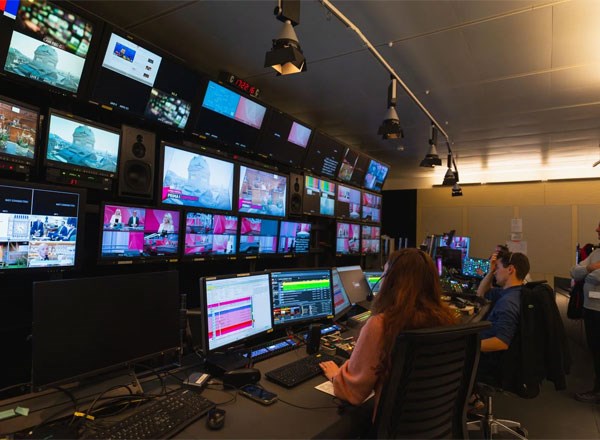
A recent webinar on AI and media workflows brought together executives from Graham Media Group, Morgan Murphy Media, Fox Television Stations and Ross Video to cut through the hype and focus on what is changing in day‑to‑day operations. The consensus: use automation to handle routine work, ensure tools interoperate cleanly, and keep final editorial judgement firmly with humans.
Moving beyond isolated pilots into production environments is now the aim at Graham Media Group, according to Director of Transformation Michael Newman. Progress is uneven across teams, he noted, but the direction of travel is to embed AI inside existing systems rather than treat it as a side project. That shift puts fresh emphasis on access controls, reliability, metadata discipline and support processes for broadcast engineers.
Morgan Murphy Media's Chief Innovation Officer, Colin Benedict, set out the newsroom case simply: let machines take care of SEO, tagging, clipping and repackaging so journalists can do more journalism.
"Do we really want our journalists to be focused on tools? Or do we want them to be focused on finding compelling stories, talking to people in the community, being creative in their storytelling?" Colin Benedict – Chief Innovation Officer – Morgan Murphy Media
Fox Television Stations' Tim Joyce underlined that adoption depends on culture as much as technology. In live broadcasting, "mostly right" can still cause real issues, so the smart place to begin is with low‑risk, high‑value applications that measurably improve efficiency without touching critical playout. Examples discussed included captioning, asset tagging, facial tracking, semantic search and script‑aware graphics suggestions—jobs that are tightly connected to the workflow and easy to evaluate.
From the vendor side, Ross Video's Jenn Jarvis stressed that AI should only be used where it is the best fit for a concrete production problem.
"We're definitely not using AI just for the sake of it. But when we're trying to solve a problem and AI is the best tool for the job, it makes sense.
Jenn Jarvis – Manager, Solutions – Production Workflow at Ross Video
Integration repeatedly surfaced as the real bottleneck. AI agents sound impressive, but deliver little unless surrounding systems can exchange data and context. Siloed tools and patchy metadata undermine results. Newman summed up the operational need: "To have a durable, consistent metadata across all of these different platforms is really important to be able to take the most advantage of what is available for a specific story." Michael Newman – Director of Transformation – Graham Media Group
Breaking news provides the clearest stress test. A single development can rapidly spawn live streams, social posts, web updates, graphics, alerts and archive pulls. The panel's point was not merely that AI could tidy up after the fact, but that better orchestration and shared story data from the outset make those assets easier to track, repurpose and publish across platforms at speed.
Trust and governance were non‑negotiable. No one argued for removing human judgement; quite the opposite. If automation is going to touch editorial or production workflows, teams need traceability: what content was used, what the AI changed, what a person approved, and why a decision was taken. Well‑placed human checkpoints—particularly where on‑air output, public publishing or intellectual property are involved—are the practical basis of trust, not red tape.
Panelists also discussed AI's role in raising editorial quality. Fox is testing tools to flag questions around fairness, balance and language, while Morgan Murphy is exploring prompts that surface the kinds of follow‑ups an editor—or a viewer—might expect. With audience metrics piling up faster than teams can interpret them, analytics that distil meaningful insight were another recurring theme.
There was clear guidance on where to tread carefully. Digital producer roles will evolve as automation takes on more packaging and distribution work. By contrast, master control was cited as a poor place to trial autonomy. Start where tasks are repetitive, the risk is low and the benefits are obvious, and expand from there. As Benedict put it: "We look at it through the lens of, 'How can we use those roles to create content that's more meaningful to our audiences?'
Colin Benedict – Chief Innovation Officer – Morgan Murphy Media
For engineers, the bottom line is straightforward. Success will not hinge on clever prompting; it will come from robust plumbing—clean, consistent metadata; open, well‑documented interfaces; useful logs; sensible permissions; and systems that can be trusted when the red light is on. With that foundation, teams can apply automation confidently to real newsroom workflows rather than keep it in the experimental bucket.
www.rossvideo.com/
Moving beyond isolated pilots into production environments is now the aim at Graham Media Group, according to Director of Transformation Michael Newman. Progress is uneven across teams, he noted, but the direction of travel is to embed AI inside existing systems rather than treat it as a side project. That shift puts fresh emphasis on access controls, reliability, metadata discipline and support processes for broadcast engineers.
Morgan Murphy Media's Chief Innovation Officer, Colin Benedict, set out the newsroom case simply: let machines take care of SEO, tagging, clipping and repackaging so journalists can do more journalism.
"Do we really want our journalists to be focused on tools? Or do we want them to be focused on finding compelling stories, talking to people in the community, being creative in their storytelling?" Colin Benedict – Chief Innovation Officer – Morgan Murphy Media
Fox Television Stations' Tim Joyce underlined that adoption depends on culture as much as technology. In live broadcasting, "mostly right" can still cause real issues, so the smart place to begin is with low‑risk, high‑value applications that measurably improve efficiency without touching critical playout. Examples discussed included captioning, asset tagging, facial tracking, semantic search and script‑aware graphics suggestions—jobs that are tightly connected to the workflow and easy to evaluate.
From the vendor side, Ross Video's Jenn Jarvis stressed that AI should only be used where it is the best fit for a concrete production problem.
"We're definitely not using AI just for the sake of it. But when we're trying to solve a problem and AI is the best tool for the job, it makes sense.
Jenn Jarvis – Manager, Solutions – Production Workflow at Ross Video
Integration repeatedly surfaced as the real bottleneck. AI agents sound impressive, but deliver little unless surrounding systems can exchange data and context. Siloed tools and patchy metadata undermine results. Newman summed up the operational need: "To have a durable, consistent metadata across all of these different platforms is really important to be able to take the most advantage of what is available for a specific story." Michael Newman – Director of Transformation – Graham Media Group
Breaking news provides the clearest stress test. A single development can rapidly spawn live streams, social posts, web updates, graphics, alerts and archive pulls. The panel's point was not merely that AI could tidy up after the fact, but that better orchestration and shared story data from the outset make those assets easier to track, repurpose and publish across platforms at speed.
Trust and governance were non‑negotiable. No one argued for removing human judgement; quite the opposite. If automation is going to touch editorial or production workflows, teams need traceability: what content was used, what the AI changed, what a person approved, and why a decision was taken. Well‑placed human checkpoints—particularly where on‑air output, public publishing or intellectual property are involved—are the practical basis of trust, not red tape.
Panelists also discussed AI's role in raising editorial quality. Fox is testing tools to flag questions around fairness, balance and language, while Morgan Murphy is exploring prompts that surface the kinds of follow‑ups an editor—or a viewer—might expect. With audience metrics piling up faster than teams can interpret them, analytics that distil meaningful insight were another recurring theme.
There was clear guidance on where to tread carefully. Digital producer roles will evolve as automation takes on more packaging and distribution work. By contrast, master control was cited as a poor place to trial autonomy. Start where tasks are repetitive, the risk is low and the benefits are obvious, and expand from there. As Benedict put it: "We look at it through the lens of, 'How can we use those roles to create content that's more meaningful to our audiences?'
Colin Benedict – Chief Innovation Officer – Morgan Murphy Media
For engineers, the bottom line is straightforward. Success will not hinge on clever prompting; it will come from robust plumbing—clean, consistent metadata; open, well‑documented interfaces; useful logs; sensible permissions; and systems that can be trusted when the red light is on. With that foundation, teams can apply automation confidently to real newsroom workflows rather than keep it in the experimental bucket.
www.rossvideo.com/

Top Related Stories
Click here for the latest broadcast news stories.
01/06/2026
Nvidia Extends AI Cloud Ecosystem Worldwide
Nvidia says its AI Cloud ecosystem is rapidly scaling to support the global buildout of "AI factory" infrastructure, as partners add capacity for ente
Nvidia Extends AI Cloud Ecosystem Worldwide
Nvidia says its AI Cloud ecosystem is rapidly scaling to support the global buildout of "AI factory" infrastructure, as partners add capacity for ente
10/02/2025
G42 & AMD To Enable AI Innovation
G42, the leading AI technology group from Abu Dhabi, United Arab Emirates (UAE), announced today a strategic investment in France in partnership with
G42 & AMD To Enable AI Innovation
G42, the leading AI technology group from Abu Dhabi, United Arab Emirates (UAE), announced today a strategic investment in France in partnership with
23/05/2024
Advanced Systems Group Launches AI and Advanced Analytics Practice
Advanced Systems Group, LLC (ASG) has launched its 'AI and Advanced Analytics' practice, allowing for delivery of complete AI solutions. The AI team w
Advanced Systems Group Launches AI and Advanced Analytics Practice
Advanced Systems Group, LLC (ASG) has launched its 'AI and Advanced Analytics' practice, allowing for delivery of complete AI solutions. The AI team w
30/10/2024
Brightcove AI Suite To Be Expanded
Brightcove has announced it will expand its recently launched Brightcove AI Suite with a new AI-Text-to-Video pilot in Q1 2025 and will soon add addit
Brightcove AI Suite To Be Expanded
Brightcove has announced it will expand its recently launched Brightcove AI Suite with a new AI-Text-to-Video pilot in Q1 2025 and will soon add addit
27/02/2026
Telestream Unveils Expanded Practical AI Enhancements for 2026
Telestream, a leader in media workflow technology, has announced a significant expansion of its practical AI capabilities across its core product suit
Telestream Unveils Expanded Practical AI Enhancements for 2026
Telestream, a leader in media workflow technology, has announced a significant expansion of its practical AI capabilities across its core product suit
04/09/2025
DVEO To Unveil New AI Tools For Media At IBC 2025
DVEO will be showcasing its new suite of AI Tools for Media at IBC 2025, which are designed to help broadcasters, OTT platforms, and content owners ma
DVEO To Unveil New AI Tools For Media At IBC 2025
DVEO will be showcasing its new suite of AI Tools for Media at IBC 2025, which are designed to help broadcasters, OTT platforms, and content owners ma
07/07/2026
NVIDIA Launches Revenue-Sharing Plan
As AI shifts from model development to large-scale inference, demand is moving towards continuously running AI factories that generate tokens at volum
NVIDIA Launches Revenue-Sharing Plan
As AI shifts from model development to large-scale inference, demand is moving towards continuously running AI factories that generate tokens at volum
26/05/2026
ADLINK Showcases Physical AI Breakthroughs At COMPUTEX 2026
ADLINK Technology Inc. (TAIEX: 6166), a global provider of edge AI computing, will exhibit at COMPUTEX 2026 under the banner "Leading Edge AI Computin
ADLINK Showcases Physical AI Breakthroughs At COMPUTEX 2026
ADLINK Technology Inc. (TAIEX: 6166), a global provider of edge AI computing, will exhibit at COMPUTEX 2026 under the banner "Leading Edge AI Computin
07/10/2025
Gcore Launches AI Cloud Stack
Gcore has launched AI Cloud Stack, a next-generation software solution for building private AI clouds with hyperscaler-grade capabilities. The solutio
Gcore Launches AI Cloud Stack
Gcore has launched AI Cloud Stack, a next-generation software solution for building private AI clouds with hyperscaler-grade capabilities. The solutio
24/07/2026
Virgin Media Deploys AI Robots To Monitor TV Network In Real Time
New AI tools will continuously check more than 220 channels and alert human teams, with the most-watched stations probed every six minutes. Virgin Med
Virgin Media Deploys AI Robots To Monitor TV Network In Real Time
New AI tools will continuously check more than 220 channels and alert human teams, with the most-watched stations probed every six minutes. Virgin Med
14/04/2026
3Play Media Launches AI Dubbing Tool
3Play Media has announced the launch of a new AI dubbing solution designed to help YouTube creators expand their reach to global audiences. The Boston
3Play Media Launches AI Dubbing Tool
3Play Media has announced the launch of a new AI dubbing solution designed to help YouTube creators expand their reach to global audiences. The Boston
08/04/2026
Avid Showcases AI-Powered Media Platform
Avid has announced it will unveil a range of new innovations at NAB Show 2026, aimed at helping media organisations adapt to the rapidly evolving digi
Avid Showcases AI-Powered Media Platform
Avid has announced it will unveil a range of new innovations at NAB Show 2026, aimed at helping media organisations adapt to the rapidly evolving digi
18/03/2026
Tightrope Media Systems To Unveil AI-Powered Audio Description Service
Tightrope Media Systems is set to introduce a new AI-driven audio description service at the NAB Show 2026, as part of an expansion of its MediaScribe
Tightrope Media Systems To Unveil AI-Powered Audio Description Service
Tightrope Media Systems is set to introduce a new AI-driven audio description service at the NAB Show 2026, as part of an expansion of its MediaScribe
16/03/2026
Applied AI Embeds In Media Operations - Amagi
Applied AI is moving from pilots to production across media operations, while global Free Ad-supported Streaming TV (FAST) continues to expand, accord
Applied AI Embeds In Media Operations - Amagi
Applied AI is moving from pilots to production across media operations, while global Free Ad-supported Streaming TV (FAST) continues to expand, accord
11/03/2026
Backlight Report Highlights Surge In Media Storage And AI Use
Backlight has released its 2026 Iconik Media Stats Report, revealing how growing content volumes, rising storage demands and increased use of artifici
Backlight Report Highlights Surge In Media Storage And AI Use
Backlight has released its 2026 Iconik Media Stats Report, revealing how growing content volumes, rising storage demands and increased use of artifici