Menu



BROADCAST FILM AND VIDEO DIRECTORY
Broadcast News

04/11/2026
How Broadcasters Can Move AI From Pilot To Production
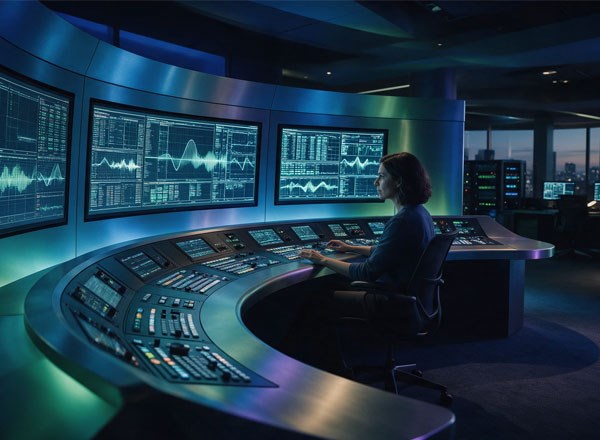
Artificial intelligence has shifted from novelty to necessity for media and telecoms, with operators trialling it across customer care, discovery, networks, software and service operations. Yet proving a concept is very different from running AI reliably in live environments.
A production-ready system must be consistent, integrate with existing tooling, earn teams’ trust, operate within clear limits and, crucially, solve a real operational problem with measurable outcomes. That’s especially true in television, where complex mixes of platforms, apps, content pipelines, cloud infrastructure, monitoring and customer-facing layers must perform across devices and distribution paths. Tools that sit outside those workflows may be interesting, but they don’t automatically make operations more efficient.
The common stumbling block is not TV-specific: pilots often showcase what the model can do, not how the surrounding workflow will use it. Demonstrating that AI can classify incidents or mine logs is useful; turning that output into action is the harder part. Who receives the result? Can it enrich and update a ticket? What happens if the model is uncertain? Who validates recommendations? And how will the organisation prove the process is faster or more accurate than before? In TV operations, a wrong turn can be worse than no recommendation if it sends engineers down an unhelpful path.
The mindset shift is to treat AI as part of an existing operational process, not a standalone technology experiment. The most productive starting points are usually modest, repetitive and structured tasks where AI can contribute reliably and where results can be quantified.
Incident triage is a good example. Operations teams invest significant time reviewing alerts and tickets, determining the issue type, affected scope and which team should act. AI can pre-classify and extract key details so engineers focus on investigation. Test automation is another: TV services span multiple workflows and devices, and maintaining coverage is labour-intensive. AI can generate or run scenarios, analyse outcomes and flag where deeper checks are needed. Likewise, AI-assisted log analysis can surface patterns across high-volume data and summarise likely causes, giving engineers a sharper starting point.
What unites these use cases is not the technology itself but the operational bottlenecks they target. Start with a measurable process first, not a tool hunting for a problem.
Automation still benefits from human judgement. In live TV, engineers need transparency on how a conclusion was reached, and a clear path to validate, reject or escalate it. Designing an explicit human validation layer—where AI proposes and people decide—keeps risk in check. Over time, as acceptance and accuracy rise for low-risk tasks, more of the workflow can be automated; where consequences are higher, human oversight remains essential. Acceptance rates are telling: if engineers routinely adopt AI’s suggestions, the system is adding value; if they frequently adjust or refuse them, that’s a signal for improvement.
Measuring the right outcomes matters more than counting AI activity. Volumes of prompts, tasks or outputs show usage, not business impact. Operationally meaningful metrics include time saved, faster incident resolution—especially for recurring issues—accuracy in context (where the cost of the remaining errors is clear) and user acceptance. Together these create a clearer picture of value and guide where to double down or scale back.
In other words, the question should not be, “How much AI are we using?” It should be, “What operational improvement can we demonstrate because AI is being used?”
Real value also depends on integration, not just the model or a chatbot front-end. TV operations run through ticketing systems (history and ownership), monitoring (alerts and service health), engineering environments (code, tests and deployments) and documentation (service context and known issues). Connecting AI to these sources embeds it in the flow of work, rather than forcing engineers to consult a separate destination. That requires the right architecture—integrations, data access controls, workflow logic and traceability so teams can see what data informed which action.
As discrete AI wins accumulate, operators can link them into end-to-end support. A monitoring alert could be classified automatically, enriched with context, matched to past incidents and presented with suggested next steps. Tests could validate a fix before deployment, with outcomes feeding back into the knowledge base. The aim is not full autonomy; it’s smoother information flow and reduced operational effort as complexity scales across multiple platforms.
AgileTV is pursuing this path with MerAIdian, its AI QA Automation Hub, which brings AI agents into TV service operations and ties automation to existing engineering and ops workflows. Early results across five concurrent projects include 76 hours of manual work saved over five weeks, 100% incident classification and an 80% acceptance rate for outputs. These figures don’t replace broader operational KPIs, but they illustrate the type of evidence that helps move AI from experimentation to day-to-day use.
For CTOs, engineering leads and operations teams, success is less about picking the most advanced model and more about designing the operating model around it. Prioritise clearly defined problems, integrate with systems teams already use and keep human validation where it matters. Measure time saved, accuracy, resolution speed and acceptance—not just activity.
This reframes investment decisions. Instead of asking where to add AI, identify processes where automation removes friction, improves consistency or frees engineers for higher-value work. TV’s complexity won’t disappear—new devices, platforms and distribution models will keep adding layers. AI alone won’t erase that, but when embedded in the tools, workflows and teams that run TV services, it can make the complexity manageable.
The next phase of AI in television is likely to be less spectacle and more substance: making everyday operations faster, more consistent and easier to run, one workflow at a time.
agiletv.com/

Top Broadcast News Stories
04/11/2026
RTÉ Mixes 2026 World Football Championship Commentary
RTÉ combined Calrec's Type R system with its SMPTE ST 2110 network to rethink how it mixed commentary for the 2026 World Football Championship. Where
RTÉ Mixes 2026 World Football Championship Commentary
RTÉ combined Calrec's Type R system with its SMPTE ST 2110 network to rethink how it mixed commentary for the 2026 World Football Championship. Where
04/11/2026
Gravity Media Powers Live Vertical Experience For Meta Connect 2026
Meta asked Gravity Media to boost engagement among mobile-first viewers for Meta Connect 2026, tasking the company’s Creative and Managed Services tea
Gravity Media Powers Live Vertical Experience For Meta Connect 2026
Meta asked Gravity Media to boost engagement among mobile-first viewers for Meta Connect 2026, tasking the company’s Creative and Managed Services tea
04/11/2026
How Broadcasters Can Move AI From Pilot To Production
Artificial intelligence has shifted from novelty to necessity for media and telecoms, with operators trialling it across customer care, discovery, net
How Broadcasters Can Move AI From Pilot To Production
Artificial intelligence has shifted from novelty to necessity for media and telecoms, with operators trialling it across customer care, discovery, net
04/11/2026
Bildquadrat Expands Production Communication With Riedel Virtual SmartPanel
Riedel Communications today announced that Düsseldorf-based production company Bildquadrat relies on Riedel's Virtual SmartPanel (VSP) to flexibly exp
Bildquadrat Expands Production Communication With Riedel Virtual SmartPanel
Riedel Communications today announced that Düsseldorf-based production company Bildquadrat relies on Riedel's Virtual SmartPanel (VSP) to flexibly exp
04/11/2026
PlayBox Neo Puts Playout for 24/7 News Outlet
PlayBox Neo has taken 24/7 playout for the news outlet Cheddar to the cloud. Powered by PlayBox Neo's own CDN and the full PlayBox Neo Suite media pla
PlayBox Neo Puts Playout for 24/7 News Outlet
PlayBox Neo has taken 24/7 playout for the news outlet Cheddar to the cloud. Powered by PlayBox Neo's own CDN and the full PlayBox Neo Suite media pla
04/11/2026
AV on Tap: TVC Delivers a Barrel Full of Entertainment at Cooper & Co
Hospitality AV specialist TVC Technology Solutions has completed an ambitious integrated audio-visual installation at Cooper & Co, an Amber Taverns pu
AV on Tap: TVC Delivers a Barrel Full of Entertainment at Cooper & Co
Hospitality AV specialist TVC Technology Solutions has completed an ambitious integrated audio-visual installation at Cooper & Co, an Amber Taverns pu
04/11/2026
Qvest Completes Asharq’s All-IP Riyadh News Hub With Seamless Two-Month Cutover
Qvest has delivered Asharq's new all-IP broadcast facility at SRMG's headquarters in Riyadh's King Abdullah Financial District (KAFD), completing the
Qvest Completes Asharq’s All-IP Riyadh News Hub With Seamless Two-Month Cutover
Qvest has delivered Asharq's new all-IP broadcast facility at SRMG's headquarters in Riyadh's King Abdullah Financial District (KAFD), completing the
04/11/2026
Neuron AV Revamps Manchester’s Satan’s Hollow With Martin Audio BlacklineQ
Satan's Hollow, one of Manchester's longest-serving alternative venues, has undergone a major audio refit by Neuron AV, which selected Martin Audio's
Neuron AV Revamps Manchester’s Satan’s Hollow With Martin Audio BlacklineQ
Satan's Hollow, one of Manchester's longest-serving alternative venues, has undergone a major audio refit by Neuron AV, which selected Martin Audio's
03/11/2026
Percon Launches CYGNUS uOTDR
In broadcast, a faulty camera cable is paid for on air: no picture, no margin and an audience waiting. That is why technical crews check their cabling
Percon Launches CYGNUS uOTDR
In broadcast, a faulty camera cable is paid for on air: no picture, no margin and an audience waiting. That is why technical crews check their cabling
03/11/2026
NUGEN Audio Vislm 3 Adapts To Evolving Production Workflows
NUGEN Audio has launched VisLM 3, the newest generation of its award-winning loudness metering solution, ahead of AES Show 2026: Nashville (Booth 337)
NUGEN Audio Vislm 3 Adapts To Evolving Production Workflows
NUGEN Audio has launched VisLM 3, the newest generation of its award-winning loudness metering solution, ahead of AES Show 2026: Nashville (Booth 337)