Menu
Menu



BROADCAST FILM AND VIDEO DIRECTORY
Broadcast News

29/07/2026
Live Audio Monitoring
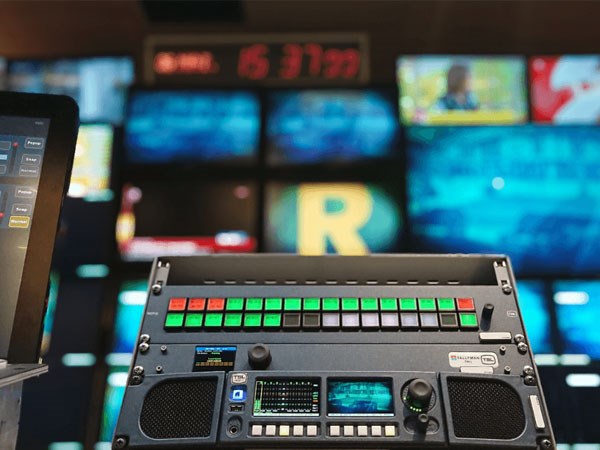
As live workflows grow in scale and complexity, audio monitors that deliver reliability, clarity and speed are now fundamental to keeping broadcasts on air.
Live production offers no second chances. Engineers must juggle multiple sources, fast-changing priorities and exacting deadlines while ensuring programmes stay on air. At the same time, hybrid infrastructures that blend SDI with IP, remote and distributed production have made signal chains more intricate than ever.
In this environment, trust in core tools is everything. Engineers expect systems to be consistent, intuitive and dependable, without adding to cognitive load or operational overhead. When those expectations are met, teams can make decisions quickly and focus on content rather than firefighting.
Audio monitoring sits at the centre of that confidence. If operators can depend on what they hear, reach the right sources at speed and count on accurate metering from end to end, they can concentrate on delivering great television. As workflows evolve, the role of the audio monitor has moved from a tick-box compliance device to a pillar of operational resilience, enabling technical choices that balance performance, efficiency and audience needs.
The best live-production technology is often invisible. When equipment does its job flawlessly, no one mentions it; when it fails, it suddenly becomes the problem everyone must solve. Audio monitors are a prime example: unnoticed when solid, but immediately critical if they falter.
Designing for real-world control rooms, OB trucks and flypacks means starting with how operators actually work—rapidly, under pressure and often by feel. Tactile, familiar controls that can be operated with confidence reduce the need to dive into dense menus or rely on touchscreens prone to slips and mis-taps. Keeping eyes on pictures and ears on sound, rather than on the kit, speeds up decision-making.
The same principle extends to the monitoring output itself. Engineers consistently prioritise high-quality audio and precise metering across relevant standards. Poor fidelity or inconsistent metering—especially where colour grading or ballistics are inaccurate—introduces doubt and slows the workflow. When monitoring is trustworthy, teams act decisively and move on.
Spec sheets rarely tell the full story. Two units can look similar on paper yet feel very different on the bench. A key question is what functionality is truly available on day one. Build quality matters, but so do inclusive features: if essential I/O or control capabilities sit behind extra licences, projects can be hit by cost and time surprises once installation begins.
Reliability is non-negotiable. Live facilities run around the clock across studios, central galleries, OBs and portable kits. Hardware that maintains uptime under constant use, supported by responsive, expert human support in multiple time zones, underpins operational resilience.
Total cost of ownership also matters. Lower power draw, credible sustainability credentials and long service life should be part of the purchasing calculus from the start. These are core considerations that inform TSL’s approach to design and delivery.
Technology choices must also reflect how audiences actually consume content. While next-generation formats continue to mature, broadcasters need to balance innovation with real-world demand—particularly as a significant share of viewing happens on mobile devices, where the benefits of some immersive formats may be limited. The smarter path is to adopt standards where they bring clear operational and commercial advantages, and to support the signal types and workflows that deliver the greatest value today.
Ultimately, the success of any monitor is measured not by how many features it lists, but by the confidence it gives operators. Reliability remains the keystone for global teams handling top-tier live events. As Paul Sykes, Chief Facility Engineer at Gravity Media, said: "We literally turned them on and never had to bother the TSL team since. We took them out of the box, and they’ve been working since day one."
That is precisely the experience engineers want from equipment that must perform across every production day in, day out.
Live production pressures will only intensify. The tools that win out will be those that simplify complex environments, speed up routine tasks and quietly deliver certainty. Audio monitoring may not be the most visible part of a show, but it remains one of the most essential—working unobtrusively to give teams the assurance they need to produce exceptional live content.
tslproducts.com
Live production offers no second chances. Engineers must juggle multiple sources, fast-changing priorities and exacting deadlines while ensuring programmes stay on air. At the same time, hybrid infrastructures that blend SDI with IP, remote and distributed production have made signal chains more intricate than ever.
In this environment, trust in core tools is everything. Engineers expect systems to be consistent, intuitive and dependable, without adding to cognitive load or operational overhead. When those expectations are met, teams can make decisions quickly and focus on content rather than firefighting.
Audio monitoring sits at the centre of that confidence. If operators can depend on what they hear, reach the right sources at speed and count on accurate metering from end to end, they can concentrate on delivering great television. As workflows evolve, the role of the audio monitor has moved from a tick-box compliance device to a pillar of operational resilience, enabling technical choices that balance performance, efficiency and audience needs.
The best live-production technology is often invisible. When equipment does its job flawlessly, no one mentions it; when it fails, it suddenly becomes the problem everyone must solve. Audio monitors are a prime example: unnoticed when solid, but immediately critical if they falter.
Designing for real-world control rooms, OB trucks and flypacks means starting with how operators actually work—rapidly, under pressure and often by feel. Tactile, familiar controls that can be operated with confidence reduce the need to dive into dense menus or rely on touchscreens prone to slips and mis-taps. Keeping eyes on pictures and ears on sound, rather than on the kit, speeds up decision-making.
The same principle extends to the monitoring output itself. Engineers consistently prioritise high-quality audio and precise metering across relevant standards. Poor fidelity or inconsistent metering—especially where colour grading or ballistics are inaccurate—introduces doubt and slows the workflow. When monitoring is trustworthy, teams act decisively and move on.
Spec sheets rarely tell the full story. Two units can look similar on paper yet feel very different on the bench. A key question is what functionality is truly available on day one. Build quality matters, but so do inclusive features: if essential I/O or control capabilities sit behind extra licences, projects can be hit by cost and time surprises once installation begins.
Reliability is non-negotiable. Live facilities run around the clock across studios, central galleries, OBs and portable kits. Hardware that maintains uptime under constant use, supported by responsive, expert human support in multiple time zones, underpins operational resilience.
Total cost of ownership also matters. Lower power draw, credible sustainability credentials and long service life should be part of the purchasing calculus from the start. These are core considerations that inform TSL’s approach to design and delivery.
Technology choices must also reflect how audiences actually consume content. While next-generation formats continue to mature, broadcasters need to balance innovation with real-world demand—particularly as a significant share of viewing happens on mobile devices, where the benefits of some immersive formats may be limited. The smarter path is to adopt standards where they bring clear operational and commercial advantages, and to support the signal types and workflows that deliver the greatest value today.
Ultimately, the success of any monitor is measured not by how many features it lists, but by the confidence it gives operators. Reliability remains the keystone for global teams handling top-tier live events. As Paul Sykes, Chief Facility Engineer at Gravity Media, said: "We literally turned them on and never had to bother the TSL team since. We took them out of the box, and they’ve been working since day one."
That is precisely the experience engineers want from equipment that must perform across every production day in, day out.
Live production pressures will only intensify. The tools that win out will be those that simplify complex environments, speed up routine tasks and quietly deliver certainty. Audio monitoring may not be the most visible part of a show, but it remains one of the most essential—working unobtrusively to give teams the assurance they need to produce exceptional live content.
tslproducts.com
Top Related Stories
Click here for the latest broadcast news stories.
26/07/2018
Jünger Audio Adds More Features To D*AP8 Monitoring Audio Processor
Jünger Audio has added a variety of new features and functionalities to its D*AP8 Monitoring Audio Processor (MAP) with its latest firmware upgrade. T
Jünger Audio Adds More Features To D*AP8 Monitoring Audio Processor
Jünger Audio has added a variety of new features and functionalities to its D*AP8 Monitoring Audio Processor (MAP) with its latest firmware upgrade. T
31/03/2014
Jünger Audio Unveils D*AP8 MAP Monitoring Audio Processor
Following Dolby's decision in 2013 to discontinue its DP570 Multichannel Audio Tool, dynamics specialist Jünger Audio is now the sole company in the w
Jünger Audio Unveils D*AP8 MAP Monitoring Audio Processor
Following Dolby's decision in 2013 to discontinue its DP570 Multichannel Audio Tool, dynamics specialist Jünger Audio is now the sole company in the w
26/09/2002
DK-Audio launch new audio monitoring unit
DK-Audio have launched their new PT0600M-LS Audio Monitor, which will be shipping within the next two months. This new addition to DK-Audio's range of
DK-Audio launch new audio monitoring unit
DK-Audio have launched their new PT0600M-LS Audio Monitor, which will be shipping within the next two months. This new addition to DK-Audio's range of
11/11/2016
What Is The Future For Immersive Audio?
Peter Poers, Managing Director at Jünger Audio, looks at production efforts versus consumer experience. Introduction Along with the evolution of highe
What Is The Future For Immersive Audio?
Peter Poers, Managing Director at Jünger Audio, looks at production efforts versus consumer experience. Introduction Along with the evolution of highe
24/01/2019
Krotus Audio Teams Up With Signum Audio
Krotos Audio and loudness plugin manufacturer Signum Audio have teamed up to offer BUTE Loudness Solutions with a 50% OFF sale until 31 January. Aside
Krotus Audio Teams Up With Signum Audio
Krotos Audio and loudness plugin manufacturer Signum Audio have teamed up to offer BUTE Loudness Solutions with a 50% OFF sale until 31 January. Aside
26/05/2026
Plus Audio Announced as Live Pro Audio Sponsor for Mediatech Africa 2026
Plus Audio has been named an official sponsor of the Live Pro Audio technology sector at Mediatech Africa 2026, scheduled to run from June 30 to July
Plus Audio Announced as Live Pro Audio Sponsor for Mediatech Africa 2026
Plus Audio has been named an official sponsor of the Live Pro Audio technology sector at Mediatech Africa 2026, scheduled to run from June 30 to July
12/12/2008
Wohler's VMDA-SUM8 Enhances Audio Monitoring In Game Creek Video's Newest HD Production Unit
Wohler Technologies has announced that mobile production company Game Creek Video has installed VMDA-SUM8 analog/digital summing audio monitors in the
Wohler's VMDA-SUM8 Enhances Audio Monitoring In Game Creek Video's Newest HD Production Unit
Wohler Technologies has announced that mobile production company Game Creek Video has installed VMDA-SUM8 analog/digital summing audio monitors in the
05/04/2023
Leader To Demonstrate Software-Based Live Cloud Video Flow Monitoring
Leader Instruments Corporation is to demonstrate software-based live cloud video flow monitoring at the April 16th-19th NAB Show in Las Vegas. This sy
Leader To Demonstrate Software-Based Live Cloud Video Flow Monitoring
Leader Instruments Corporation is to demonstrate software-based live cloud video flow monitoring at the April 16th-19th NAB Show in Las Vegas. This sy
31/05/2006
Zandar announces more HDTV monitoring solutions at Broadcast LIVE
Zandar Technologies, a leading innovator in the design and development of high resolution image processing and control systems, will be introducing th
Zandar announces more HDTV monitoring solutions at Broadcast LIVE
Zandar Technologies, a leading innovator in the design and development of high resolution image processing and control systems, will be introducing th
14/01/2026
PSI Audio To Display Broadcast and Studio Monitoring Solutions
PSI Audio will present its latest professional monitoring and room-acoustics technologies at Hamburg Open and NAMM 2026, highlighting new broadcast-fo
PSI Audio To Display Broadcast and Studio Monitoring Solutions
PSI Audio will present its latest professional monitoring and room-acoustics technologies at Hamburg Open and NAMM 2026, highlighting new broadcast-fo
18/12/2024
Nixer Expands Its PD Series Of Portable Audio Monitoring Solutions
Nixer Pro Audio has expanded its PD Series of portable audio monitoring solutions, marking the launch of its new PD Milan and Evie64m networking modul
Nixer Expands Its PD Series Of Portable Audio Monitoring Solutions
Nixer Pro Audio has expanded its PD Series of portable audio monitoring solutions, marking the launch of its new PD Milan and Evie64m networking modul
10/05/2023
MuMu Nightclub Installs Martin Audio Stereo Monitoring Solution
Maidstone's MuMu nightclub, known for its vibrant and energetic atmosphere, recently underwent a major refurbishment after a significant fire in 2021.
MuMu Nightclub Installs Martin Audio Stereo Monitoring Solution
Maidstone's MuMu nightclub, known for its vibrant and energetic atmosphere, recently underwent a major refurbishment after a significant fire in 2021.
14/09/2022
Riedel Launches New Audio Monitoring App
Riedel Communications has launched a new Audio Monitoring App (AMA) for its 1200 Series SmartPanels. With the AMA — combined with Riedel’s Intercom Ap
Riedel Launches New Audio Monitoring App
Riedel Communications has launched a new Audio Monitoring App (AMA) for its 1200 Series SmartPanels. With the AMA — combined with Riedel’s Intercom Ap
05/07/2019
Mark Yaman Selects PMC Monitoring For Audio Asylum
Build quality, accuracy and phenomenal sound are just some of the reasons why Mark Yaman selected PMC monitoring for Audio Asylum, for his audio post
Mark Yaman Selects PMC Monitoring For Audio Asylum
Build quality, accuracy and phenomenal sound are just some of the reasons why Mark Yaman selected PMC monitoring for Audio Asylum, for his audio post
21/11/2018
Unity Audio Installs L / C / R Monitoring At Hurricane Sound
Unity Audio has recently installed L / C / R monitoring at Hurricane Sound utilising the latest MK-III Boulders as part of ongoing upgrades to Thom Pa
Unity Audio Installs L / C / R Monitoring At Hurricane Sound
Unity Audio has recently installed L / C / R monitoring at Hurricane Sound utilising the latest MK-III Boulders as part of ongoing upgrades to Thom Pa